
Introduction to Firewalls
The question “what is a firewall?” often arises when people begin learning how computers and networks protect themselves. A firewall is a device or program that controls network traffic flow between networks or hosts with different security postures.
In everyday terms, a firewall provides a controlled boundary. It applies a defined policy to traffic that reaches it, helping determine which traffic may pass and which traffic should be blocked. This makes firewalls an important part of defensive network security.
What Is a Firewall?
The National Institute of Standards and Technology (NIST) defines firewalls as devices or programs that control network traffic flow between networks or hosts with different security postures. A security posture is the security condition and protection level associated with a network or host.
A firewall may protect a network boundary or an individual host. A host is a device or system connected to a network. The firewall’s specific role depends on its type, placement, policy, and configuration.
A firewall policy establishes how traffic should be controlled. The firewall applies that policy to the network traffic within its scope rather than making independent judgments about whether every communication is safe.
Why Firewalls Matter
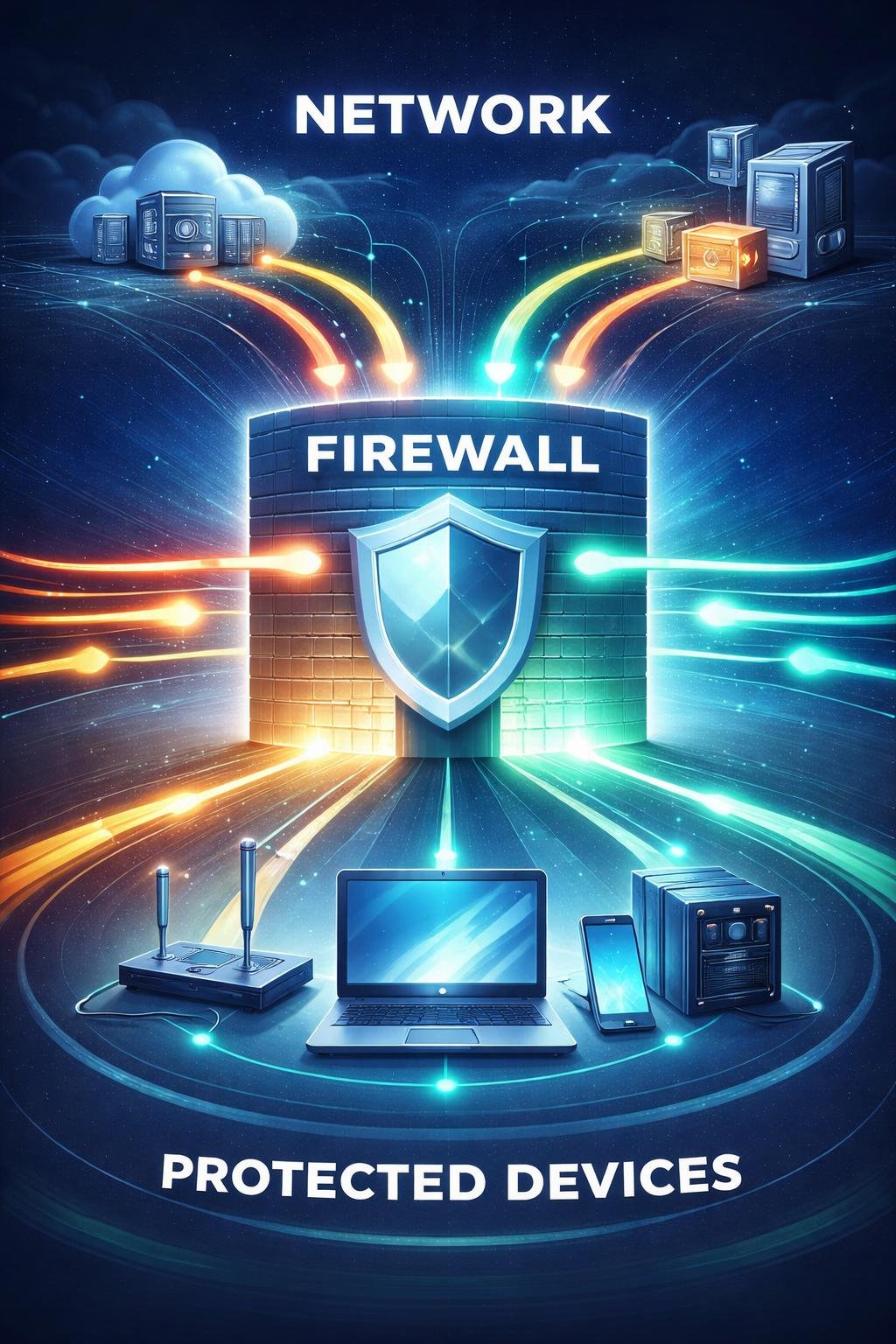
Networks and hosts may have different security postures. Controlling traffic between them helps create a managed boundary instead of allowing traffic to flow without an applied security policy.
Firewall policies support defensive protection by defining how traffic should be handled. Their effectiveness depends on selecting a suitable firewall approach and then configuring, testing, deploying, and managing it appropriately.
This matters in homes, workplaces, and other connected environments because network protection is not simply a matter of installing a device or program. The protective result is shaped by both the firewall technology and the policy applied through it.
How a Firewall Filters Network Traffic

A firewall examines network traffic presented to it and applies configured policy. Based on that policy, it controls whether the traffic is permitted or blocked.
Packet filtering is one firewall technology covered by NIST. Network communications are carried in units commonly called packets. Packet filtering applies traffic-control rules to those packets so that the firewall can make decisions consistent with its policy.
The policy is therefore central to the process. A firewall cannot apply a useful protective approach merely because it exists; it must be configured to enforce the intended traffic-control decisions. Testing helps determine whether that configuration operates as intended before and after deployment.
This explanation describes defensive traffic control only. It does not imply that every firewall uses an identical filtering method or has the same security capabilities.
Firewall Types and Key Features
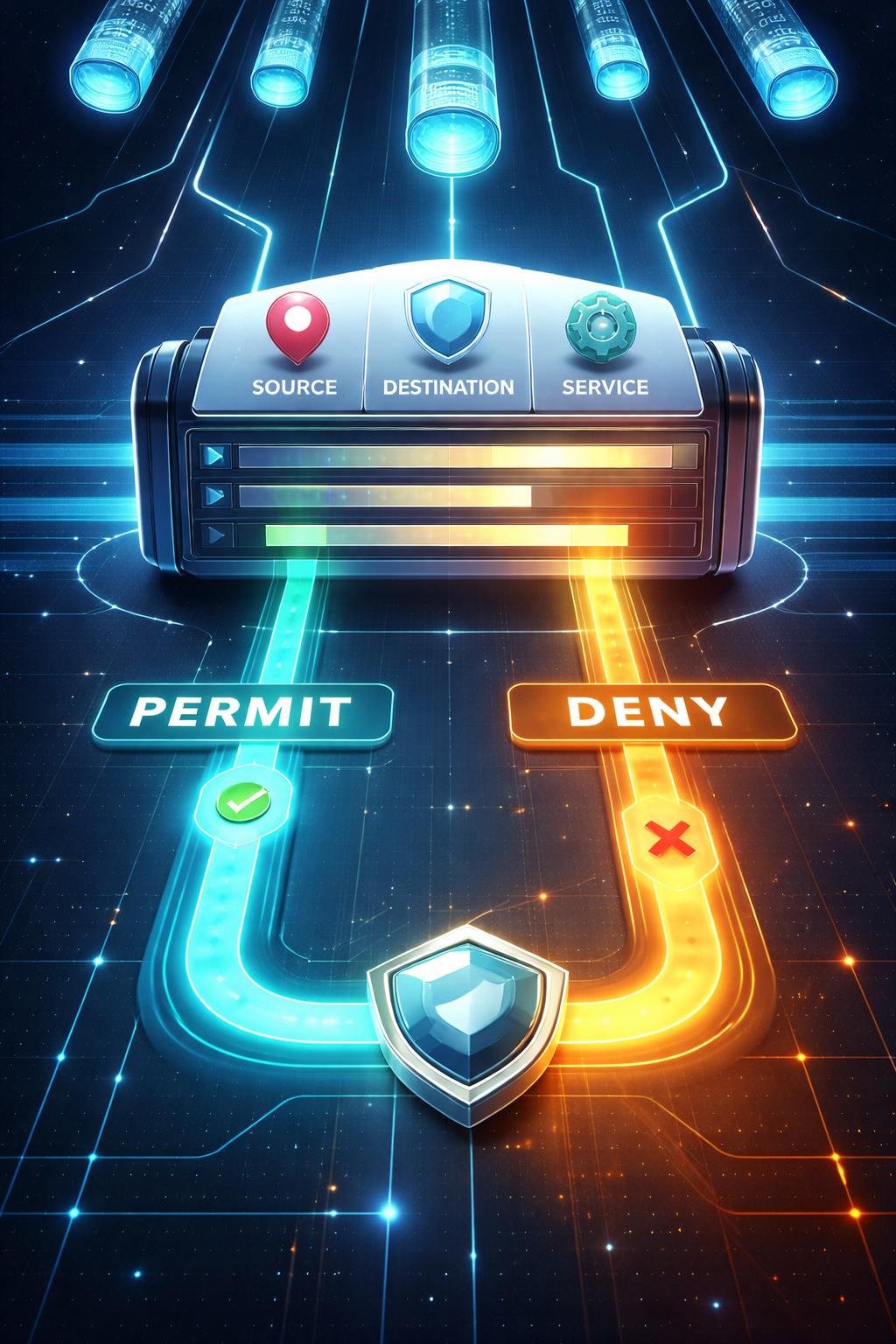
NIST guidance covers several related firewall technologies, including packet filtering, network firewalls, host-based or personal firewalls, and proxies. These categories describe different ways to apply traffic control.
- Packet filtering: Applies configured policy to network packets as part of traffic-control decisions.
- Network firewall: Controls traffic at a network boundary within the scope established by its deployment and policy.
- Host-based firewall: Runs on or protects an individual host, applying traffic controls associated with that system.
- Personal firewall: A host-focused firewall category intended to apply traffic control for an individual system.
- Proxy: A firewall technology that acts as an intermediary in controlled network communication.
These categories can have different capabilities, advantages, and disadvantages. They should not be treated as interchangeable without considering the environment and the traffic that needs to be controlled.
Firewall protection also depends on an operational process. Selection identifies an appropriate approach; configuration translates policy into controls; testing evaluates whether those controls behave as intended; deployment places the protection into use; and ongoing management maintains the firewall and its policy.
Everyday Firewall Examples
Hypothetical home example: A household uses a network firewall at the boundary between its local network and another network. The firewall applies the household’s configured policy to traffic crossing that boundary. This illustrates network-level traffic control and does not describe a particular router, service, or product feature.
Hypothetical device example: A computer has a host-based firewall. Its policy controls network traffic within the firewall’s scope for that individual host. This illustrates how host-level protection differs from a firewall placed at a broader network boundary.
Hypothetical workplace example: An organization selects a firewall approach, configures a policy, tests the resulting controls, and then deploys and manages the firewall. This example shows that traffic control involves both technology and an ongoing administrative process.
Firewall Benefits and Limitations
The main defensive benefit of a firewall is controlled network traffic flow. It can establish a managed boundary between networks or hosts with different security postures and apply a defined policy at that boundary.
Different firewall technologies offer different security capabilities, advantages, and disadvantages. The appropriate choice depends on what must be protected, where traffic control must occur, and how the firewall will be configured and managed.
A firewall also has important limitations. Its presence alone does not establish that the policy is appropriate, the configuration is correct, or the deployment has been tested. Protection can be affected by decisions made during selection, configuration, testing, deployment, and ongoing management.
A firewall is one security measure, not a guarantee of complete protection. Its defined role in controlling network traffic should not be confused with complete protection against every digital risk.
Common Firewall Misunderstandings
Every firewall is the same
Firewalls include multiple technologies, such as packet filtering, network firewalls, host-based or personal firewalls, and proxies. Their capabilities, advantages, disadvantages, placement, and scope can differ.
Installing a firewall completes the job
Installation or deployment is only one stage. NIST guidance also addresses selection, configuration, testing, policy, and management. These elements affect how the firewall applies protection.
A firewall automatically knows what should be allowed
A firewall applies configured policy. The policy and configuration provide the basis for its traffic-control decisions, so they require deliberate planning and management.
A firewall removes every security risk
A firewall controls network traffic within its scope. That function does not provide complete security, and no firewall should be represented as guaranteeing protection from every threat.
DigiNana Beginner Guide
Clearly labeled hypothetical example: DigiNana is a fictional educational guide helping a beginner understand firewall policy. She compares a firewall to a managed checkpoint, while explaining that the comparison is only a learning aid and not a complete technical model.
In the example, the checkpoint has written instructions describing which traffic may pass. The firewall applies its configured policy in a similar sense: traffic is handled according to established controls rather than according to a vague instruction to “block danger.”
The verified technical point is that a firewall controls network traffic flow and that policy, configuration, testing, deployment, and management affect how this protection is applied. DigiNana’s checkpoint story is fictional and should not be treated as a product test, an exact software interface, or a description of a specific firewall configuration.
Practical Tips
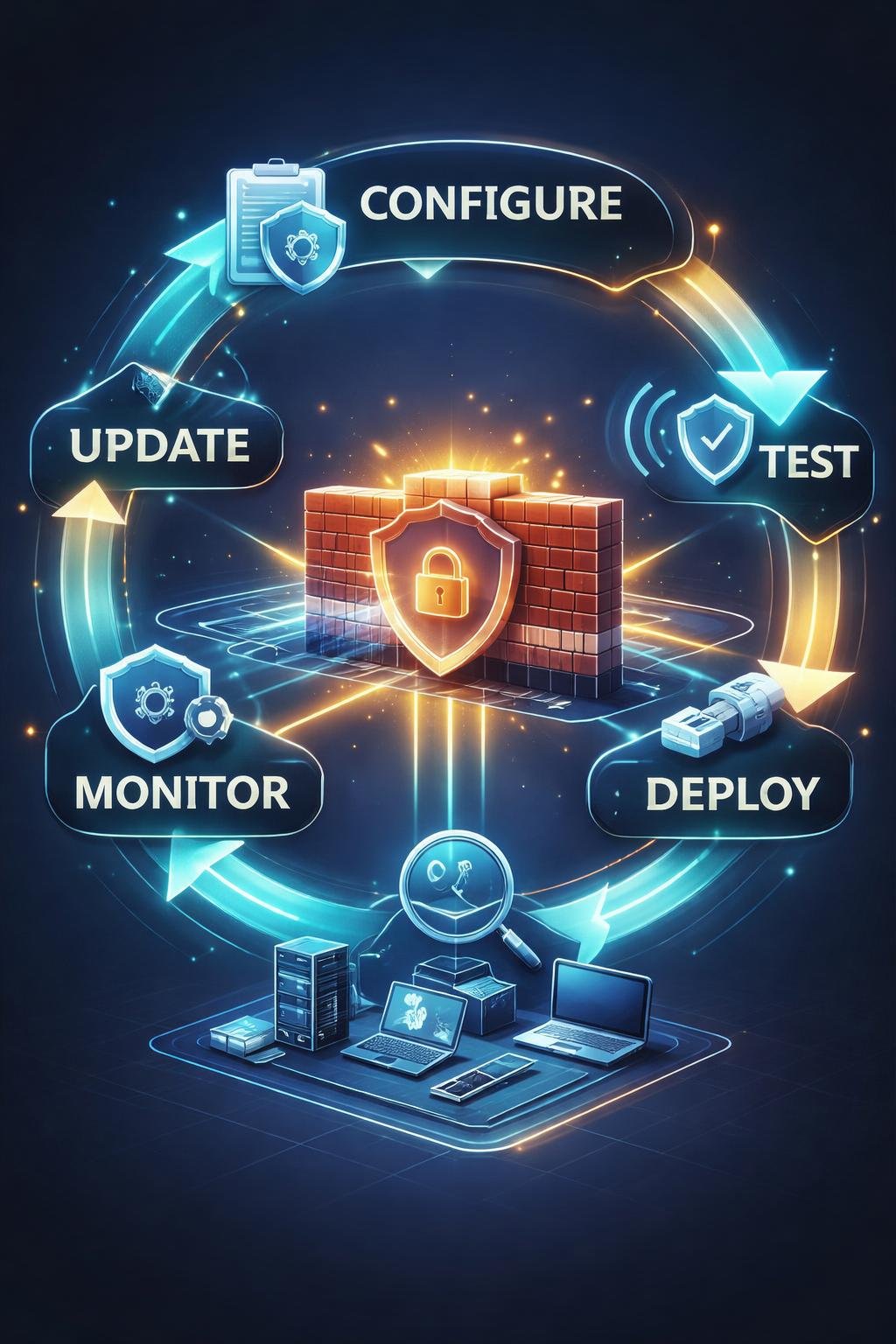
- Identify the protection scope. Determine whether traffic control is needed at a network boundary, on an individual host, or through another supported firewall approach.
- Choose an appropriate firewall technology. Consider the capabilities, advantages, and disadvantages relevant to the intended environment rather than assuming every firewall category is equivalent.
- Define the policy. Establish how the firewall is expected to control traffic before relying on it for protection.
- Configure the firewall carefully. Configuration should reflect the intended firewall policy and deployment.
- Test the controls. Testing is part of determining whether the firewall behaves as intended.
- Manage the firewall after deployment. A deployed firewall and its policy require continued management rather than being treated as a one-time installation.
- Check current official documentation. Product features, software interfaces, and recommended procedures may change, so verify important instructions with current official sources.
These are general defensive principles rather than product-specific settings. If a configuration decision is unclear, consult current official documentation or appropriately qualified support rather than relying on unverified instructions.
Firewalls, Safety, and Privacy
A firewall’s defined purpose is traffic-flow control. It should therefore be used as part of broader digital safety rather than as a replacement for phishing awareness, malware prevention, account protection, privacy care, or safe incident recovery.
For example, a firewall policy does not remove the need to evaluate suspicious messages carefully or protect account credentials. Likewise, network traffic control should not be treated as proof that every file, account interaction, or communication is trustworthy.
If a security incident is suspected, follow current official recovery guidance relevant to the affected system or service. Do not disclose passwords, authentication codes, recovery phrases, or other secrets to someone offering unsolicited help.
Firewall configuration and incident response are different activities. Routine configuration concerns how traffic policy is applied, while incident recovery requires guidance appropriate to the specific event. Important recovery steps should be verified through current official documentation.
Frequently Asked Questions
What does a firewall do?
A firewall is a device or program that controls network traffic flow between networks or hosts with different security postures. It applies a configured policy to traffic within its scope.
What is the difference between a network firewall and a host-based firewall?
A network firewall applies traffic control at a network boundary within its deployment scope. A host-based firewall applies traffic control for an individual host. The appropriate approach depends on where protection is needed.
What is packet filtering?
Packet filtering is a firewall technology that applies configured traffic-control rules to network packets. It is one category within the broader range of firewall technologies.
What is a firewall policy?
A firewall policy defines the intended approach to controlling network traffic. Configuration is used to apply that policy through the selected firewall technology.
Does a firewall require ongoing management?
Yes. NIST guidance addresses firewall selection, configuration, testing, deployment, and management. A firewall should not be treated as protection that requires attention only during installation.
Why can a firewall not provide complete security?
A firewall has a defined traffic-control role and operates within the scope of its technology, policy, configuration, and deployment. It is one defensive measure and cannot guarantee complete protection against every digital risk.
Final Takeaway

A firewall is a device or program that controls network traffic flow between networks or hosts with different security postures. It applies firewall policy to traffic within its scope, including through technologies such as packet filtering.
Firewall categories include network firewalls, host-based or personal firewalls, packet-filtering technologies, and proxies. These approaches can have different capabilities, advantages, and disadvantages.
Effective use involves more than installation. Selection, policy, configuration, testing, deployment, and ongoing management all affect how protection is applied. A firewall should be combined with broader security practices because traffic control alone cannot guarantee complete protection.
References
- SP 800-41 Rev. 1, Guidelines on Firewalls and Firewall Policy | CSRC: https://csrc.nist.gov/pubs/sp/800/41/r1/final?Offer=ab_ss_reeng_plt_var2
- Guidelines on Firewalls and Firewall Policy | NIST: https://www.nist.gov/publications/guidelines-firewalls-and-firewall-policy?pub_id=901083
Image Credits
The five DigiNana Wiki visuals associated with this article are original educational illustrations created with AI assistance. They are conceptual learning aids and must not be interpreted as verified photographs, exact software interfaces, actual device specifications, or guaranteed technical configurations.
Disclaimer
This article provides general educational information. Security threats, technical information, software interfaces, firewall features, protective measures, security conditions, product features, and service availability may change over time. No firewall or other security method guarantees complete protection. Verify important configuration, compatibility, recovery, and security details using current official documentation before acting on them.