
Introduction
If you are asking what is AI bias, the short answer is that it occurs when an artificial intelligence system produces outcomes shaped by biases in its data, design, evaluation, deployment context, or use. These outcomes may affect how people or information are categorized, sorted, recommended, or evaluated.
AI bias matters because automated outputs can influence decisions that affect people. The National Institute of Standards and Technology (NIST) explains that bias can occur across technology processes and cause harmful effects regardless of whether anyone intended those effects.
What Is AI Bias?
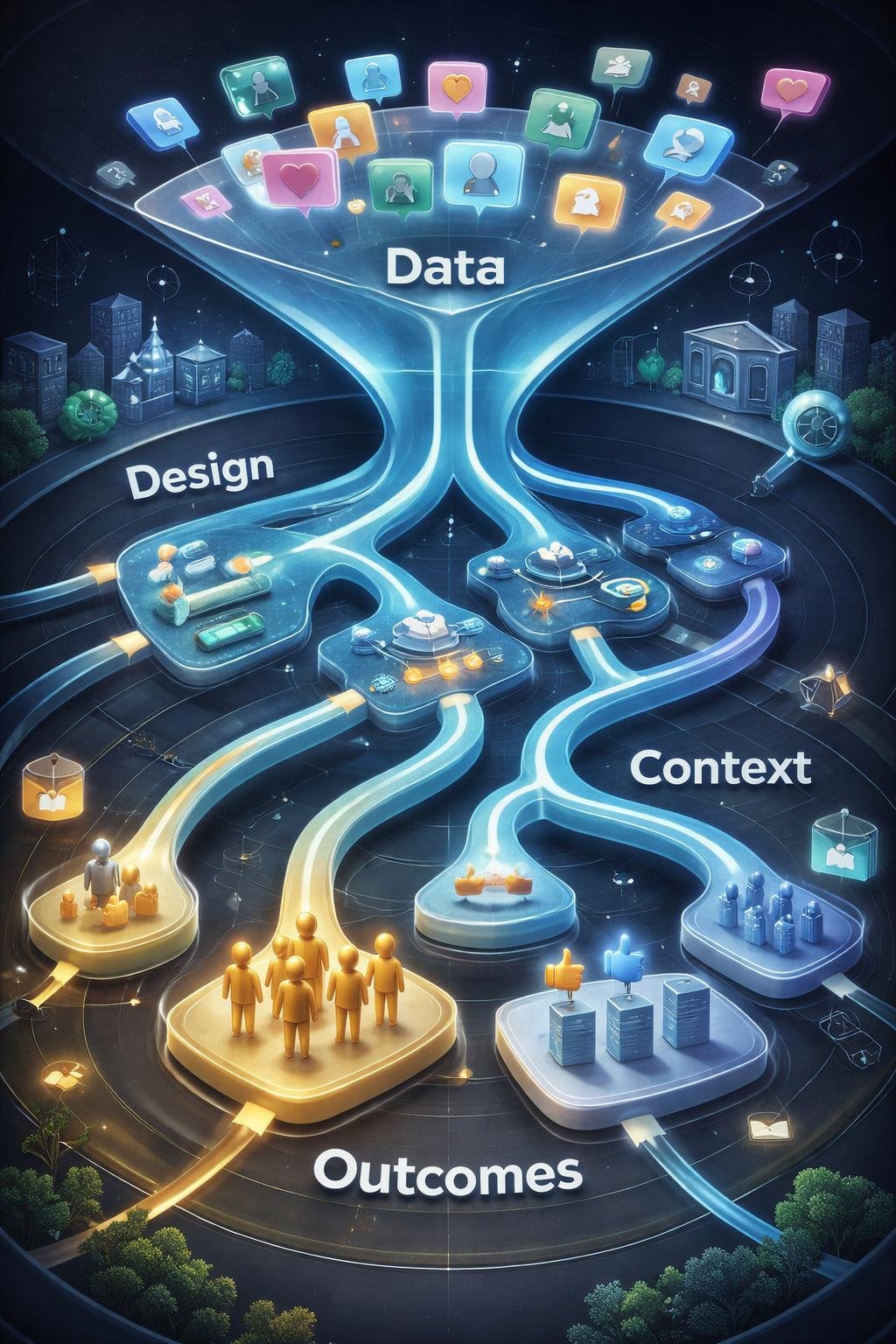
AI bias refers to systematic tendencies in an AI-assisted process that can produce harmful or inappropriate outcomes in a particular context. It is not limited to a deliberately prejudiced rule or a visibly flawed dataset.
Bias can enter at multiple points in a technology process. It may be connected to what information is collected, how concepts are represented, which outcomes a system is designed to produce, how performance is evaluated, or how people interpret and use the output.
Context is essential. A system cannot be assessed only by examining its model in isolation. Evaluators must also consider its intended use, the people affected, the surrounding decision process, and the societal values relevant to that setting.
Why AI Bias Matters
Automated systems may be used to categorize information, rank options, make recommendations, or support decisions. If bias affects these activities, the output may treat relevant people, situations, or information inappropriately.
These effects can matter even when an AI output is only advisory. A person may accept a recommendation without asking how it was generated, while repeated reliance on an unsuitable output can carry bias into the wider decision process.
NIST notes that harmful impacts can undermine public trust in AI. Trust should therefore depend on evidence about how a system was designed, tested, evaluated, and used rather than on the assumption that automation is automatically neutral.
How Bias Can Enter an AI System
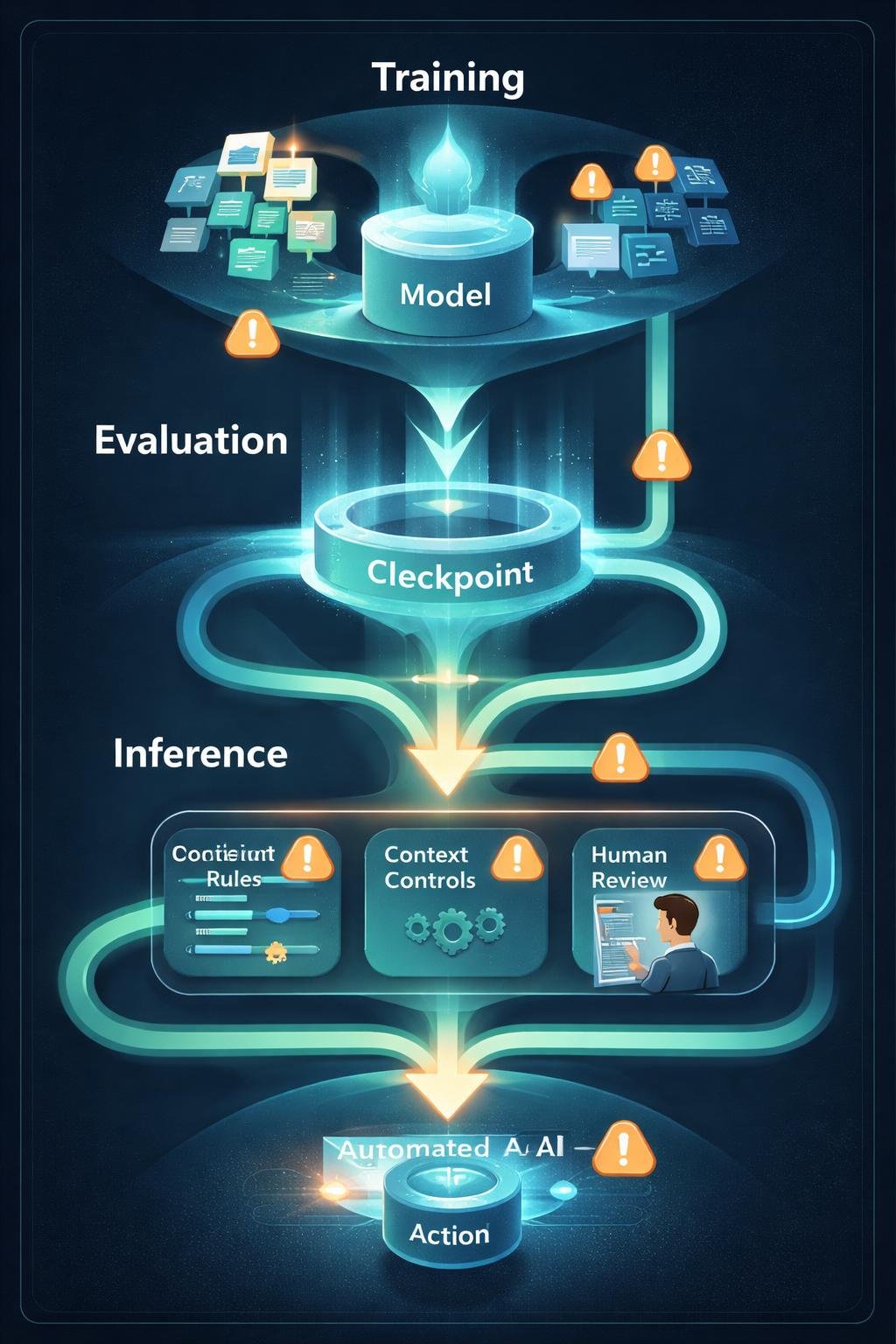
Data and representation
Machine learning is a method in which a model learns patterns from data. During training, data is used to adjust the model. Decisions about which data to collect, how to label it, what to exclude, and how to represent people or events can shape the patterns the model learns.
Data can also provide an incomplete representation of the setting in which a system will be used. Even when individual records are accurate, the selected information may fail to capture concepts that matter for a particular decision.
Model and system design
Developers make design choices about the task, input information, output categories, decision thresholds, and measures used to assess a system. These choices determine what the system is able to capture and what it leaves out.
An AI model is the computational component that generates a prediction, classification, score, or other output. An AI product is a larger system that may also include data collection, interface elements, business rules, human review, and actions taken after the model produces an output. Bias can arise in any part of this complete process.
Inference and deployment
Inference occurs when a trained model processes new input and produces an output. An output may be unsuitable if the deployment setting differs from the context considered during development or if users give the output more authority than it was designed to have.
Human use remains part of the system. People decide when to rely on a result, whether to question it, how to combine it with other information, and what action to take.
Key Sources and Contexts of AI Bias
| Area | How it relates to bias | Useful evaluation question |
|---|---|---|
| Data | Collected and selected information shapes what the model can learn or process. | What information is represented, excluded, or labeled? |
| Captured concepts | Complex ideas may be converted into categories, labels, or scores. | Does the chosen measurement fit the concept and intended use? |
| Design choices | Objectives, categories, thresholds, and decision rules shape outputs. | Who selected these rules, and what purpose do they serve? |
| Application context | The meaning and consequences of an output depend on where and how it is used. | Does the evaluation reflect the actual decision setting? |
| Societal values | Judgments about acceptable outcomes are not purely computational questions. | Which people and values are considered in the process? |
| Evaluation practices | Testing can reveal problems only within the cases, requirements, and contexts examined. | What was tested, against which criteria, and with what limitations? |
These relationships make AI bias a socio-technical issue. This means it involves both technology and the social setting in which the technology is designed and used. Technical measurements are important, but they do not by themselves determine whether an outcome is appropriate in every context.
Examples of Bias in Automated Decisions
Hypothetical educational example—categorization: A system places requests into predefined categories. If the categories do not represent important differences between requests, some cases may be repeatedly placed into an unsuitable group. This illustrates how category design can shape automated treatment.
Hypothetical educational example—sorting: A system ranks applications according to a score. The order may reflect bias if the score captures only a narrow interpretation of suitability or if relevant context is omitted. A precise ranking is not proof that the underlying criteria are appropriate.
Hypothetical educational example—recommendation: A recommendation system repeatedly presents options similar to those already selected. If designers evaluate only whether users click an option, that measure may not answer broader questions about whether the recommendations are suitable or balanced.
Verified application context—credit underwriting: NIST has discussed an initial proof of concept focused on AI or machine-learning-based credit underwriting decisions. This application demonstrates why evaluation must connect the technical system with its decision context and societal values. It does not establish that every credit system behaves in the same way or produces the same outcomes.
Benefits, Limitations, and Trade-Offs
Automated systems can support consistent procedures for categorizing, sorting, recommending, or evaluating information. They can apply a defined computational process to new inputs and provide outputs that people can examine as part of a wider workflow.
Consistency is not the same as fairness or suitability. A system can apply the same rule repeatedly while the rule, data, categories, or intended objective remains inappropriate for a particular context.
AI outputs also carry uncertainty. A model identifies patterns within the task and information available to it; it does not automatically understand every relevant human circumstance. Harmful failure modes can include inappropriate categories, misleading rankings, unsuitable recommendations, or decisions that fail to account for important context.
Testing creates another trade-off. Technical tests can reveal behavior within the cases and criteria examined, but passing a test does not establish that the system is free from bias in every future setting. A complete response must also consider intended use, affected people, human oversight, and changing deployment conditions.
Common Misunderstandings About AI Bias
“Bias must be intentional.”
Bias does not require deliberate discrimination. NIST states that harmful impacts can occur regardless of intent. An unintentional design choice or an unsuitable representation of a concept can still affect outcomes.
“A computer-generated result is automatically neutral.”
An automated output reflects selected data, objectives, categories, rules, and evaluation criteria. Computing a result does not remove the judgments that shaped the system.
“Bias is only a data problem.”
Data is one possible source, but bias can also involve model objectives, system design, decision rules, testing methods, deployment context, and human use. Replacing a dataset alone cannot address every possible source.
“One successful test proves that a system is unbiased.”
Bias is context-dependent. A test provides evidence about the cases, criteria, and conditions it covers, not a universal guarantee about all people, uses, or future conditions.
DigiNana Beginner Guide

Fictional educational walkthrough: DigiNana is reviewing a description of an imaginary automated application-sorting system. This story is not a real audit, product evaluation, or test result.
- Identify the decision. DigiNana asks whether the system merely organizes applications or whether its ranking directly influences a consequential decision.
- Examine what is captured. She lists the information converted into labels, categories, or scores and asks which relevant details may be absent.
- Follow how information is used. She checks whether the model output is combined with additional rules and whether a person reviews the result.
- Consider the context. She asks who may be affected, what the system is intended to achieve, and whether the evaluation reflects the setting in which it will operate.
- Look for meaningful testing. She asks what behavior was tested, which requirements were checked, and what limitations were documented.
The lesson from this fictional walkthrough is that examining an automated decision requires more than looking at its final score. Data, design, context, evaluation, and human action must be considered together.
Practical Tips
- Name the decision. Determine whether the system is categorizing, ranking, recommending, or making a decision.
- Ask what the output means. A score or label may have a limited technical meaning that does not justify every possible use.
- Consider missing context. Identify relevant information that the system may not capture.
- Look for documented evaluation. Check what was tested, which conditions were included, and which limitations were reported.
- Question apparently neutral outputs. A numerical result can still reflect choices about data, measurements, categories, and objectives.
- Distinguish the model from the product. Consider interfaces, additional rules, human review, and actions taken after the model responds.
- Seek human review when appropriate. If an important decision appears incorrect or lacks relevant context, ask whether a qualified person can review it.
- Use current official information. Consult the responsible organization’s current documentation when system behavior, review procedures, or available options matter.
Safety, Privacy, and Responsible Use
Responsible AI use requires attention to bias, accuracy, privacy, uncertainty, and the consequences of acting on an output. People evaluating a system should consider whether it uses only information appropriate to its purpose and whether access to sensitive information is properly controlled.
Accuracy and bias are related but not identical. A system may perform a defined technical task as measured while still being unsuitable in a particular social or decision context. Conversely, an unexpected output does not by itself identify its cause; the data, model, system rules, context, and human actions may all require examination.
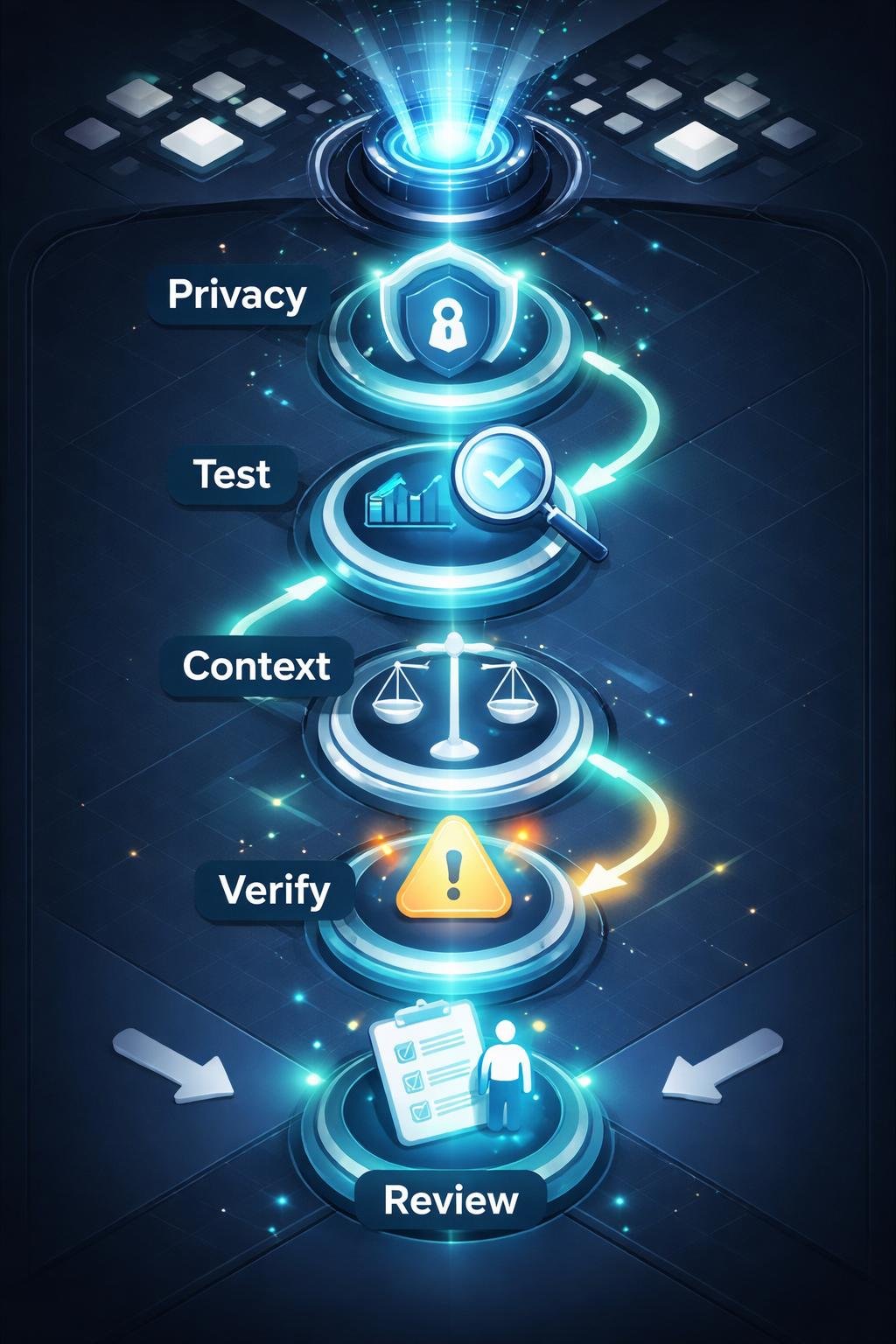
NIST describes a socio-technical approach involving testing, evaluation, verification, and validation. In practical terms, these activities can include examining system behavior, assessing it against stated goals, checking whether requirements have been met, and considering whether the complete system is suitable for its intended use.
These practices should not be treated as a guarantee that all bias has been removed. Responsible evaluation documents scope and limitations, considers societal values and affected people, and revisits assumptions when the system or its deployment context changes.
Frequently Asked Questions
Is AI bias always intentional?
No. Harmful effects can arise from data, measurements, design decisions, deployment context, or human use even when no one intended to produce them.
Can suitable data prevent all AI bias?
No dataset alone can address every source of bias. System objectives, categories, decision rules, testing, context, and the way people use outputs also matter.
How can system design affect an outcome?
Designers select what the system predicts, which information it processes, how concepts are represented, and how outputs are converted into actions. Each choice can influence an automated outcome.
Are AI decisions objective because they use mathematics?
No. Mathematics can apply a defined procedure consistently, but people still choose the data, objectives, measurements, categories, and context surrounding that procedure.
How can an organization examine AI bias?
It can use testing, evaluation, verification, and validation while considering both technical behavior and the wider social context. The process should document intended use, criteria, scope, affected people, and limitations rather than promise that every possible bias has been eliminated.
Can human review solve every bias problem?
No. Human review can provide context and a route for reconsideration, but people and organizational processes may also carry biases. Human involvement must therefore be designed and evaluated rather than assumed to be automatically corrective.
Final Takeaway
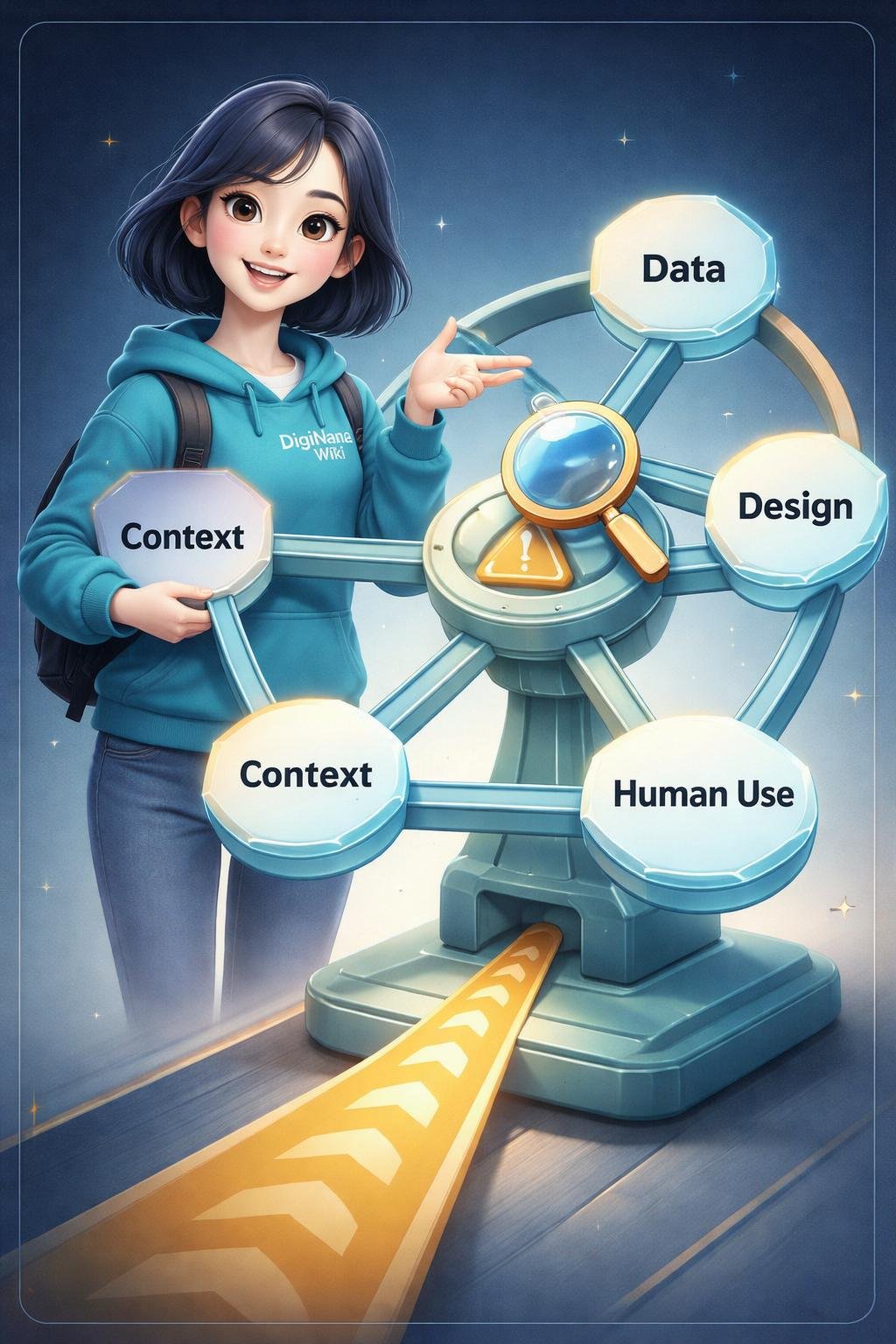
AI bias is context-dependent and can enter through data, captured concepts, model development, system design, testing, deployment, or human use. It may affect categorization, sorting, recommendations, and decisions regardless of whether harm was intended.
An automated result should not be assumed to be neutral merely because it is numerical or computer-generated. Meaningful evaluation combines technical examination with attention to intended use, societal values, affected people, uncertainty, and the complete decision process.
References
- Towards a Standard for Identifying and Managing Bias in Artificial Intelligence | NIST — https://www.nist.gov/publications/towards-standard-identifying-and-managing-bias-artificial-intelligence
- Mitigating AI/ML Bias in Context: Establishing Practices for Testing, Evaluation, Verification, and Validation of AI Systems | CSRC — https://csrc.nist.gov/pubs/pd/2022/11/09/mitigating-ai-ml-bias-in-context/final
Image Credits
The five DigiNana Wiki visuals accompanying this article are original educational illustrations created with AI assistance. They are conceptual illustrations and must not be interpreted as verified photographs, exact software interfaces, actual device specifications, or guaranteed technical configurations.
Disclaimer
This article provides general educational information. Technical information, software interfaces, product features, security conditions, and service availability can change. Consult current official documentation when important, operational, security-related, or time-sensitive details must be verified.