
Introduction
Understanding supervised vs unsupervised learning begins with a simple question: does the training data include known correct answers? The answer helps determine whether a machine-learning method learns to predict a specified value or category, or searches for patterns and groupings without predefined answers.
This distinction matters because the two approaches serve different goals. Supervised learning supports predictions about known targets, while unsupervised learning helps examine data when the desired groupings have not already been defined.
What Are Supervised and Unsupervised Learning?
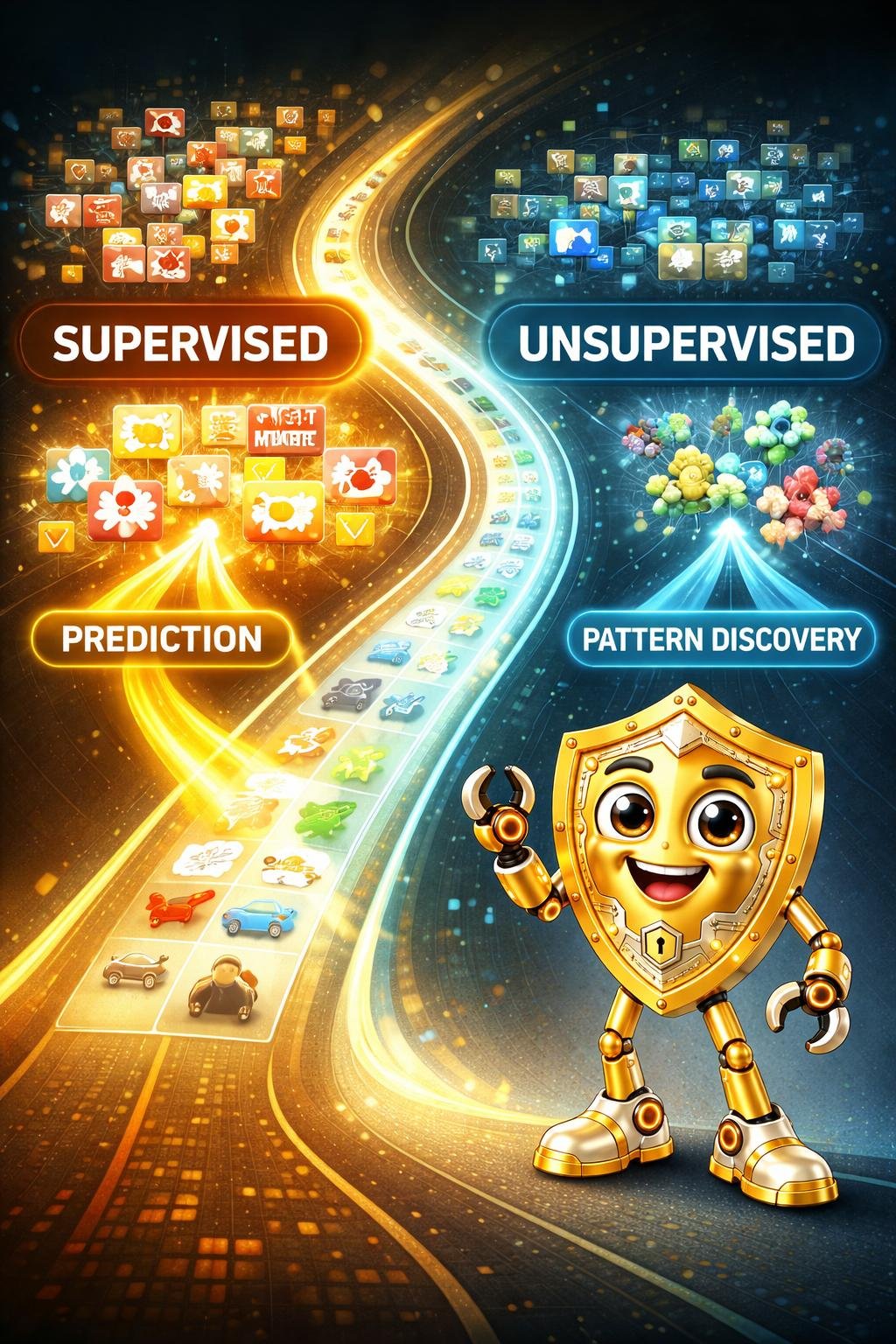
Machine learning uses examples to learn connections or identify patterns in data. A trained machine-learning model can then apply what was learned to other examples, depending on its task.
Supervised learning trains on labeled data. A label is the known correct answer associated with a training example. The method learns connections between the inputs and those answers so that it can make predictions.
Unsupervised learning receives unlabeled data. These examples do not include known correct answers. Instead of learning a predefined prediction target, the method looks for meaningful patterns, such as groups of similar data points.
Why the Difference Matters
The appropriate approach depends on both the available data and the intended outcome. If examples have known answers and the goal is to predict the same type of answer, supervised learning fits that structure.
A supervised target can be a numeric value or a category. Predicting a numeric value is called regression, while predicting a category is called classification.
If examples do not have known answers and the goal is to discover groupings or other patterns, unsupervised learning fits that purpose. The discovered groups do not automatically come with predefined meanings.
How Each Learning Method Works
Supervised training and later predictions
During supervised training, each example includes input data and a known correct answer. The learning process identifies connections that support predictions of the specified target.
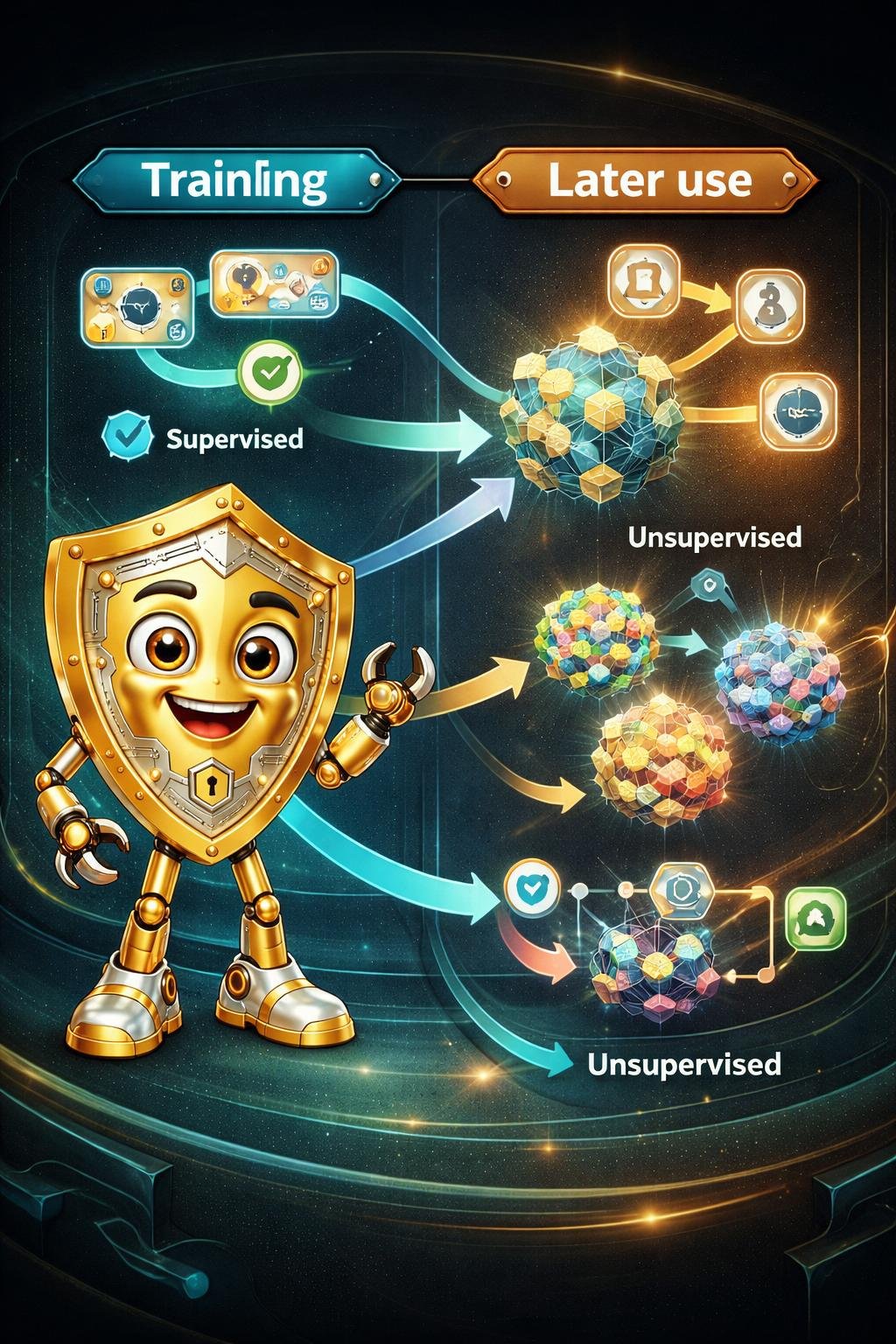
Training is the stage in which the model learns from labeled examples. The later use of that trained model to produce a prediction is a separate stage. The prediction is generated by the model and should not be confused with a newly supplied correct answer.
Unsupervised pattern discovery
During unsupervised learning, the examples have no attached correct answers. The method examines the data for meaningful patterns, often by placing similar examples into clusters.
A cluster is a group of data points treated as similar by the method. Because the training data does not provide predefined answers, people must interpret what a discovered cluster may represent rather than assuming that its meaning was supplied in advance.
Key Components and Differences
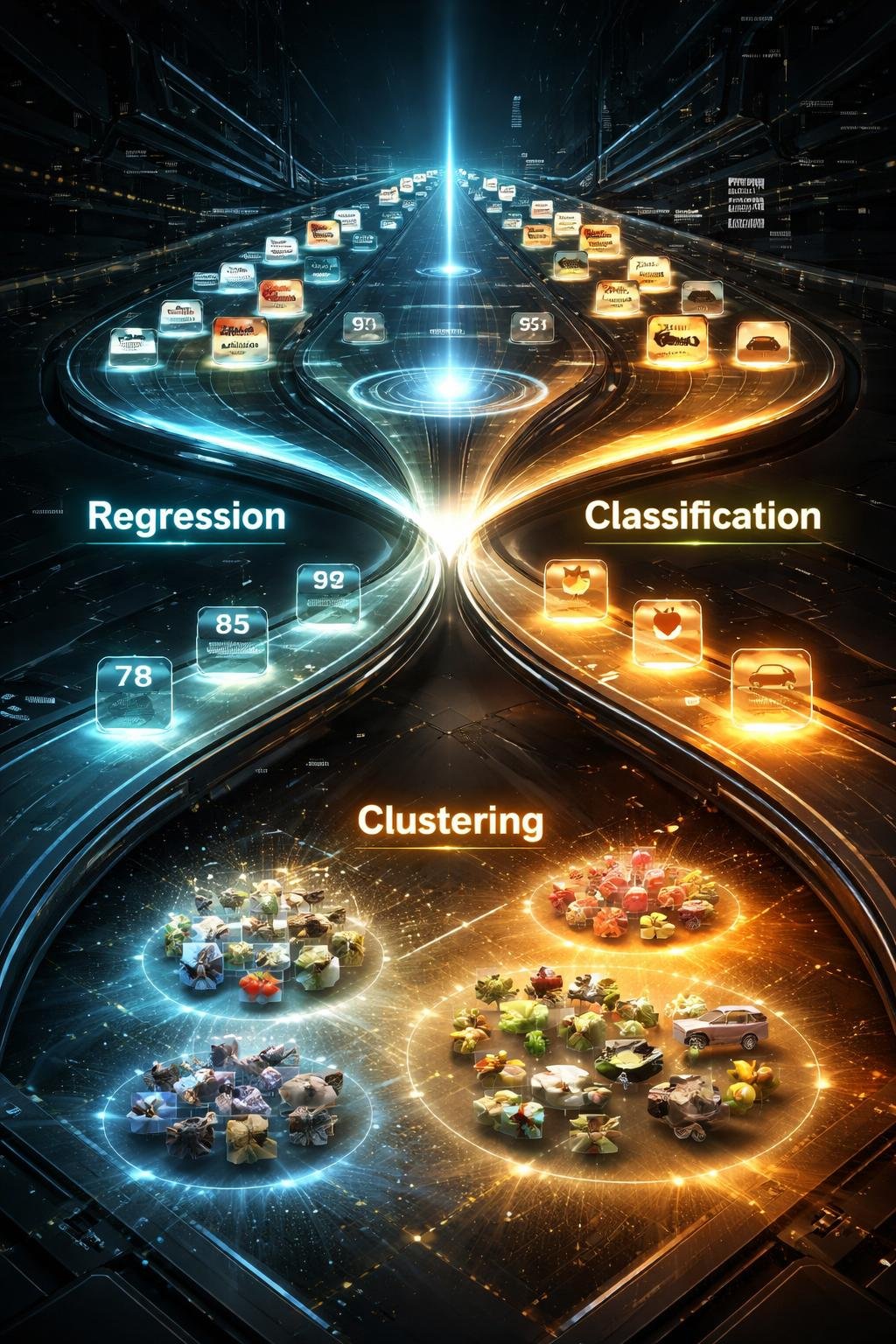
| Component | Supervised learning | Unsupervised learning |
|---|---|---|
| Training examples | Examples include input data and labels. | Examples are unlabeled. |
| Known target | A value or category to predict is known beforehand. | No correct answer is supplied for each example. |
| Typical purpose | Learn connections that support predictions. | Discover patterns or groupings. |
| Task types | Regression and classification. | Clustering is a common task. |
| Result | A predicted numeric value or category. | Patterns or clusters whose meanings are not predefined. |
Regression is a supervised task that predicts a numeric value. Classification is a supervised task that predicts a category. Both require a known type of target during training.
Clustering is an unsupervised task that groups related examples. Unlike classification, it does not learn from category labels that define the correct group for each training example.
Everyday Examples
Hypothetical example: supervised regression
Imagine a teaching dataset in which each example contains descriptive inputs and a known numeric answer. A supervised regression task would learn from those labeled examples and attempt to predict a numeric value for another example.
Hypothetical example: supervised classification
Imagine that training examples are each labeled with one of several known categories. A supervised classification task would learn connections between the inputs and those labels, then predict one of the known categories for another example.
Educational example: unsupervised clustering
An unsupervised method could examine unlabeled customer examples and group similar customers into clusters. The clusters are discovered from patterns in the examples; their meanings are not predefined answers and would still require interpretation.
These examples illustrate task structures. They are not reports of specific products, deployments, or performance results.
Benefits, Limitations, and Trade-Offs
Supervised learning provides a direct structure when the intended answer is already defined. It can be used to learn predictions for known numeric values or known categories.
Its central constraint is that training depends on labeled examples containing known answers. If the data does not provide the relevant answers, it does not have the supervised structure described here.
Unsupervised learning can be used when examples are unlabeled and the goal is to discover groupings or patterns. It does not require a predefined correct category for every example.
However, unsupervised clusters do not arrive with established meanings. Discovering a grouping and explaining what that grouping represents are separate steps. Neither learning method, by its definition alone, provides a guarantee of accuracy, fairness, privacy, or security.
Common Misunderstandings

- “All machine learning is supervised.” Supervised and unsupervised learning are different approaches, and unsupervised learning does not use known correct answers for its examples.
- “Unsupervised learning predicts predefined answers.” Its purpose is to identify patterns or groupings without predefined correct answers.
- “Classification and clustering are the same.” Classification learns to predict known categories from labeled examples, while clustering groups unlabeled examples.
- “Every cluster has an established meaning.” The meanings of unsupervised clusters are not predefined and require responsible interpretation.
- “A model output is automatically a verified fact.” A prediction or discovered grouping is a model output and should be evaluated in the context in which it will be used.
Keeping these distinctions clear prevents the task name from being mistaken for proof that an output is correct or meaningful.
DigiNana Beginner Guide
Hypothetical educational scenario: DigiNana is organizing a fictional collection of digital learning examples. This scenario is an illustration, not a real experiment or product test.
In the first version, every example already has one of several known topic labels. DigiNana wants a model to predict one of those categories for another example. Because the training examples contain known category answers, this is a supervised classification task.
In the second version, the examples have no topic labels. DigiNana asks a method to place similar examples into groups. Because no correct group is supplied for each example, this is an unsupervised clustering task.
DigiNana does not assume that a cluster has an established topic name. She examines the grouping separately and avoids presenting her interpretation as a predefined answer.
Practical Tips
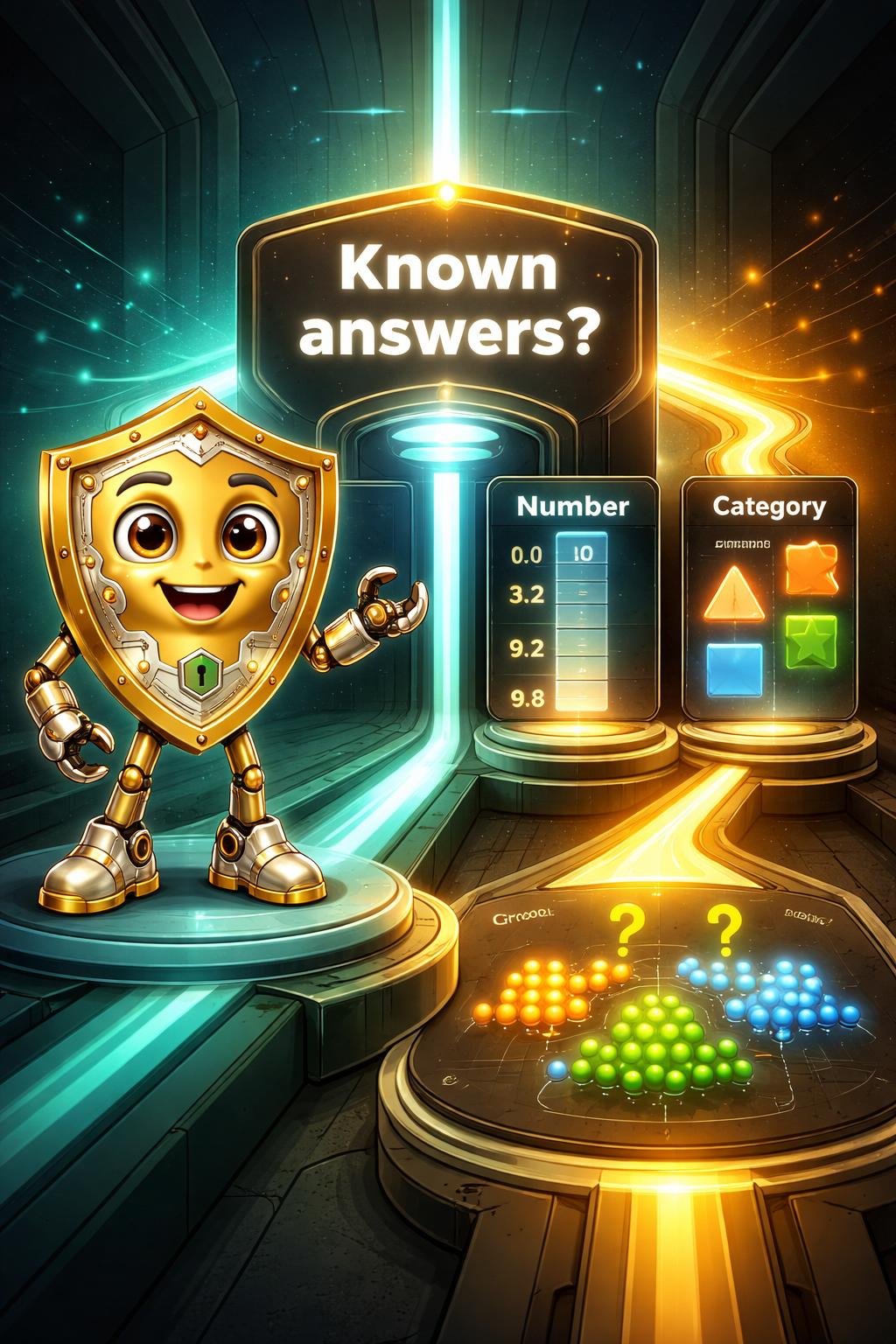
- Identify the desired outcome. Decide whether you want a prediction for a known target or want to explore possible patterns.
- Check the examples. Determine whether each training example includes a known correct answer.
- Recognize a numeric target. If labeled examples support predicting a numeric value, the supervised task is regression.
- Recognize a category target. If labeled examples support predicting one of the known categories, the supervised task is classification.
- Recognize a discovery goal. If the examples are unlabeled and the purpose is to discover groups, clustering is an unsupervised approach.
- Interpret clusters carefully. Do not assign a meaning merely because a method placed examples together.
- Evaluate outputs separately. The learning method describes how the task is organized, not a guarantee that every result is correct.
This decision process starts with the target and the data rather than choosing a method by name alone.
Safety, Privacy, Bias, and Responsible Use
Machine-learning outputs should be distinguished from verified facts. A predicted category, predicted value, or discovered cluster may require review before it informs an important decision.
For privacy, check whether the examples contain personal or sensitive information and determine what handling rules apply before using that data. The supplied sources explain the learning approaches but do not establish privacy or security guarantees for a particular dataset, model, or service.
For bias and fairness, examine whether outputs treat relevant groups differently and avoid assuming that labeled answers or discovered patterns are automatically neutral. A cluster should not be given a sensitive or consequential interpretation without adequate evidence.
To limit misinformation, describe predictions as predictions and interpretations as interpretations. Verify important claims independently rather than presenting a model output as confirmed information.
The cited sources do not guarantee correctness, fairness, privacy, or security. Responsible use therefore requires checks suited to the data, output, and consequences of the specific application.
Frequently Asked Questions
What is a label in supervised learning?
A label is the known correct answer attached to a training example. It may be a numeric value or a category, depending on the task.
What is the difference between regression and classification?
Both are supervised tasks. Regression predicts a numeric value, while classification predicts a category.
What is clustering?
Clustering is an unsupervised task that groups related or similar data points without receiving a correct group label for every example.
When is the prediction target known?
In supervised learning, the value or category to predict is known beforehand through labeled training examples.
Can unlabeled examples be used for supervised learning as described here?
Supervised learning, as defined in the supplied sources, trains on labeled examples containing known answers. Unlabeled examples instead fit the unsupervised structure when the purpose is to discover patterns or groups.
Do unsupervised clusters have predefined meanings?
No. The groups are discovered without predefined correct answers, so their meanings require separate interpretation.
Final Takeaway
Supervised learning uses labeled examples to learn predictions for known numeric values or categories. Regression predicts numbers, while classification predicts categories.
Unsupervised learning uses unlabeled examples to discover patterns or groupings, often through clustering. Those clusters do not come with predefined meanings, so they must be interpreted carefully.
References
- What is Machine Learning? | Google for Developers
- Test Your Understanding | Machine Learning | Google for Developers
Image Credits
The five DigiNana Wiki visuals are original educational illustrations created with AI assistance. They are conceptual and must not be interpreted as verified photographs, exact software interfaces, actual device specifications, or guaranteed technical configurations.
Disclaimer
This article provides educational information. Technical information, software interfaces, product features, security conditions, and service availability can change. When an important detail must be verified, consult current official documentation for the relevant technology, product, or service.